

The Sydney Opera House is a famous landmark, drawing millions every year. While many know its stunning design, there are many Opera House Secrets unknown to most.
For those keen on exploring more, behind the scenes tours give exclusive access to secret spots. These tours show the Opera House’s hidden sides, giving a peek into its inner workings.
By going beyond the usual spots, visitors can learn more about the Opera House’s past, design, and cultural importance. This introduction prepares you for the many secrets and surprises inside this Australian icon.
Key Takeaways
- Discover the hidden areas of the Sydney Opera House through behind the scenes tours.
- Gain exclusive access to restricted areas, giving a unique view of the building’s design.
- Learn about the history and cultural importance of the Opera House.
- Explore the lesser-known parts of this famous Australian landmark.
- Uncover the secrets that lie beyond the public areas of the Opera House.
Introduction to Opera House Secrets
Opera houses are more than just places for shows. They hold history, art, and secrets. The beauty of an opera house comes from its stunning design and top-notch shows. But there’s also the insider knowledge that shows how it all works.
Learning about the behind-the-scenes of an opera house can make you love opera more. It’s where magic happens, from building sets to getting ready for performances. Exploring these hidden areas gives a special view of the hard work behind the scenes.
Why Discovering Behind-the-Scenes is Important
Exploring the behind-the-scenes of an opera house lets you see the skill and effort in a show. You get to see the details of set design, the complexity of sound and lights, and the work of the team. It’s a chance to see the magic up close.
This knowledge makes the experience richer and helps you appreciate opera more. Knowing the story behind a show makes it even more beautiful.
Brief Overview of Iconic Opera Houses
The world has many famous opera houses, each with its own story and design. Places like the Sydney Opera House in Australia and the Palais Garnier in Paris are more than buildings. They are symbols of culture and history.
| Opera House | Location | Notable Feature |
|---|---|---|
| Sydney Opera House | Australia | Sail-like design |
| Palais Garnier | Paris, France | Opulent Baroque style |
| La Scala | Milan, Italy | Rich history of performances |
These opera houses are not just for shows; they’re also tourist spots and cultural symbols. Each has its own tale, and knowing these stories makes your visit even more special.
Unveiling the Architecture: What Lies Beyond the Facade
Opera houses are more than just places for shows. They are marvels of design and innovation. These buildings are art pieces that amaze with their looks and history.
Opera houses blend beauty, function, and history in their design. Visiting one is an exclusive experience. It’s more than just watching a show.
The Design Philosophy Behind Opera Houses
Opera houses aim to create a special atmosphere for both the show and the audience. Architects must mix grandeur with intimacy. This balance is key.
They use acoustic panels, balconies, and decorations to enhance the experience. It’s like getting a backstage pass into the opera world.
Hidden Architectural Features
Opera houses have secret passages, hidden rooms, and complex systems. These help with set changes and performer movements.
They also use advanced technology for performances. This includes lighting, sound, and mechanisms for scenery and performers.
| Feature | Description | Example |
|---|---|---|
| Acoustic Panels | Used to enhance sound quality within the opera house. | Sydney Opera House |
| Hidden Passages | Allow performers to move around the stage area unseen. | Palais Garnier, Paris |
| Advanced Lighting Systems | Provide dynamic lighting effects during performances. | Metropolitan Opera, New York |
These features, both seen and unseen, make opera houses special. They improve the show and show off the craftsmanship and innovation in these iconic buildings.
The Magic of Stagecraft: Insights from Behind the Curtain
Behind the grand opera house lies a complex web of stagecraft. It turns performances into unforgettable experiences. The magic of opera isn’t just in the voices but in the set design, construction, and special effects.
Understanding Set Design and Construction
The set design is key to setting the tone for the performance. It requires meticulous planning and craftsmanship. This creates an immersive environment that takes the audience into the opera’s world.
- Designers work closely with directors to create a set that fits the opera’s theme and story.
- Skilled artisans bring the designs to life using various materials and techniques during construction.
- Sets are made to be versatile, allowing for quick changes during performances.
The Role of Special Effects in Performances
Special effects are vital in making the opera’s visual and auditory experience better. From pyrotechnics and projections to sophisticated lighting, these elements create an engaging spectacle.
- Pyrotechnics add dramatic flair, making the experience memorable for the audience.
- Projection technology allows for dynamic backdrops that change with the scenes.
- Lighting design is key for visibility and mood, highlighting important moments.
Understanding stagecraft can deepen our appreciation for opera. By showing the complexity and effort in creating an opera, we see the magic behind the curtain.
Meet the Unsung Heroes: Staff at the Opera House
While the spotlight shines on the performers, a vast array of unsung heroes work tirelessly behind the scenes. These individuals are the backbone of the opera house. They ensure every performance runs smoothly and the audience has a memorable experience.
Profiles of Key Personnel
The opera house is staffed by a diverse range of professionals, each with their own unique role. The stage manager oversees the logistics of a performance, ensuring everything is in place for a successful show. The costume designer creates attire that looks stunning and meets the demands of the performance.
Other key personnel include the lighting and sound technicians. They work together to create an immersive experience for the audience. Their expertise in handling complex equipment and software is key in bringing the opera to life.
Day-to-Day Operations Behind the Scenes
A typical day at the opera house is filled with activity, as staff prepare for upcoming performances. Rehearsals are a critical part of this process. They allow performers to fine-tune their acts and the technical crew to test their equipment.
Behind the scenes, the wardrobe department is busy maintaining and preparing costumes. The set construction team works on building and repairing sets. These unseen details are what make an opera performance truly special.
By understanding the roles and dedication of the opera house staff, audiences can gain a new respect for the complexities involved in producing an opera. It’s not just about the performers on stage; it’s about the collective effort of everyone involved.
Backstage Tours: What to Expect and How to Prepare
Stepping into the backstage areas of an opera house is like entering a different world. For those who love opera and want to know more about how it’s made, behind the scenes tours are a great way to get exclusive access to these iconic buildings.
Opera houses worldwide offer tours for all kinds of interests and curiosity levels. Knowing what tours are available is the first step to planning your visit.
Types of Tours Available
Most opera houses have guided tours that show you the backstage areas, like the stage, dressing rooms, and sometimes the orchestra pit. Some tours focus on the history, architecture, or the technical side of putting on a show.
- Standard Guided Tours: These tours give a general look at the opera house, including backstage.
- Specialized Tours: These focus on specific areas like history, architecture, or technical operations.
- Private Tours: These offer a more personal experience, often with deeper insights into the opera house’s workings.
Tips for Making the Most of Your Experience
To enjoy your behind the scenes tour to the fullest, being prepared is key. Here are some tips:
- Arrive Early: Get there a bit early to enjoy the atmosphere before the tour starts.
- Ask Questions: Guides know a lot; don’t be shy to ask.
- Wear Comfortable Shoes: You’ll likely be walking a lot, so wear shoes that are comfy.
By knowing what to expect and how to prepare, you can make the most of your tour. Whether you’re a big opera fan or just curious, these tours give you a special look into a world usually hidden from view.
The History of Opera Houses: More Than Meets the Eye
Opera houses have a rich history filled with culture, art, and amazing architecture. These buildings are key to many cities’ cultural identity. They host a wide range of performances that have shaped the arts.
The first opera houses appeared in Italy in the 17th century. Over time, they’ve become more than just places for opera. They now host ballet, concerts, and theater too.
Significant Events in Opera House History
Opera houses have seen many important events. For example, the Palais Garnier in Paris is famous for its stunning decorations and architecture. It was built in the late 19th century.
“The opera house is a place where the past and present converge, where the beauty of art and architecture come together to create an unforgettable experience.”
Key moments include the opening of Venice’s Teatro di San Cassiano in 1637. The Sydney Opera House, built in the 20th century, is an iconic symbol of Australia.
| Opera House | Year Opened | Notable Features |
|---|---|---|
| Teatro di San Cassiano | 1637 | First public opera house |
| Palais Garnier | 1875 | Grand architecture, opulent decorations |
| Sydney Opera House | 1973 | Iconic sail-like design, UNESCO World Heritage Site |
Preservation Efforts and Their Importance
It’s vital to preserve opera houses. They are not just historical buildings but also keep our cultural heritage alive. Many have been restored to their former glory.
The Vienna State Opera House’s post-World War II restoration is a great example. Such efforts ensure these buildings remain grand and functional for future generations.
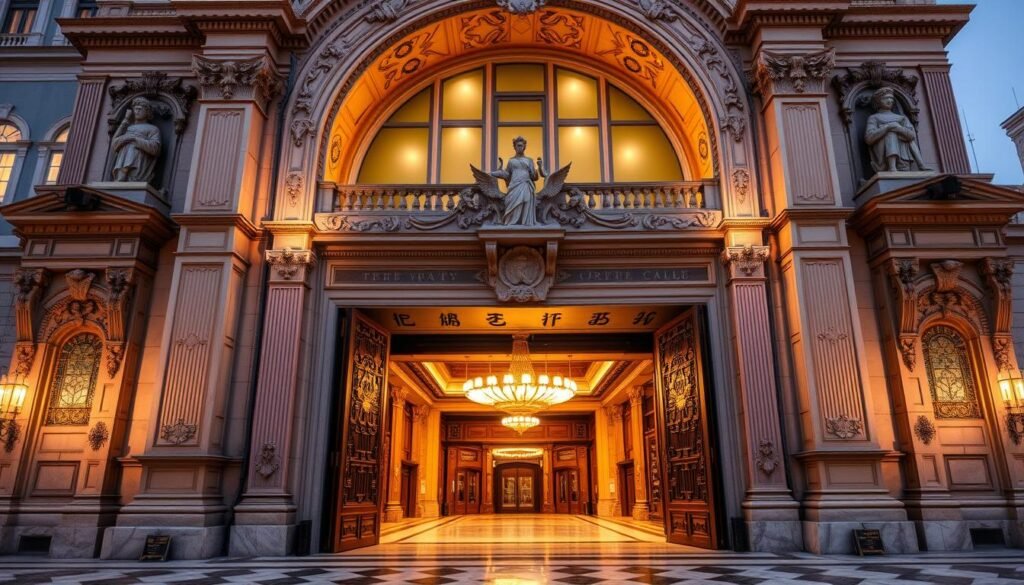
In conclusion, opera houses’ history is a blend of culture, art, and architecture. Preserving this history is key to appreciating their role in our cultural heritage.
The Impact of Technology in Modern Opera Houses
Technology is changing how we enjoy opera. It brings new ways to connect with shows. This change affects everything from behind the scenes to how we watch.
Innovations Changing the Performance Landscape
New tech is making opera more exciting. Virtual and augmented reality let us dive into the opera world. It’s like getting a front-row seat without leaving home.
Digital projections and LED lighting are also making a big difference. They help create dynamic sets that change during the show. This adds unseen details to the story.
Examples of Tech Integration in Famous Opera Houses
Top opera houses are using tech to improve their shows. For example, the Metropolitan Opera in New York is leading in live digital transmissions. This lets people all over the world watch in high definition.
| Opera House | Technology Used | Impact |
|---|---|---|
| Metropolitan Opera, New York | Live Digital Transmissions | Global audience reach |
| Royal Opera House, London | Digital Projections | Enhanced set designs |
| Opera Australia, Sydney | Virtual Reality Experiences | Immersive audience experiences |
These examples show how tech is making opera better. As tech keeps getting better, we’ll see even more amazing changes in the future.
Engaging with the Community: Outreach Programs and Events
Opera houses are now focusing on community programs. These efforts enrich our culture and make opera more accessible to everyone.

Educational Initiatives for Local Schools
Many opera houses have started educational programs for schools. These programs give students a chance to learn about opera. They can explore set design, opera history, and more.
Students can even take part in workshops on costume design, singing, or stage management. These programs help young people appreciate opera more.
Lyndon Terracini, artistic director of Opera Australia, believes “Opera is for everyone, and it’s our job to make it accessible.” Educational programs are a big step towards this goal.
“The arts are not just about creating something beautiful; they’re about creating a connection between people.”
Community Events and Their Benefits
Opera houses also host community events. These events include open days, where you can see behind the scenes, and outdoor performances. They help promote the opera house and enrich the local community.
- Open days and guided tours
- Outdoor performances and cultural festivals
- Workshops and masterclasses
These events are key in making opera more understandable and welcoming. By connecting with the community, opera houses can grow their audience and stay strong.
Conclusion: Why Understanding Opera House Secrets Enriches Your Experience
Learning about an opera house’s secrets can really make you appreciate the shows more. You’ll see how amazing the building is, the skill of the stage crew, and the hard work of the staff. This makes your visit even more special.
Enhancing Appreciation through Knowledge
Going on private tours gives you a peek at the opera house’s inner workings. The Sydney Opera House, with its unique roof, is a stunning example of architecture and history.
Exploring Beyond the Stage
Exploring more than just the stage reveals the opera’s rich history and cutting-edge tech. Discovering the secrets of an opera house can turn a regular visit into an unforgettable adventure. It helps you appreciate the art and the people behind it even more.
FAQ
What are Opera House Secrets, and why are they important?
Opera House Secrets are the hidden parts of an opera house. This includes its design, how the stage is set, and what happens behind the scenes. Knowing these secrets can make your visit more enjoyable and deepen your understanding of opera.
What can I expect to see on a behind-the-scenes tour of an opera house?
On a behind-the-scenes tour, you get to see places like backstage, where props are stored, and costume workshops. You’ll learn a lot about how the opera house works and see things that most people don’t get to see.
How do opera houses incorporate technology into their performances?
Today, opera houses use technology to improve the show. They use digital projections, LED lights, and special effects. This makes the performances more exciting and complex.
What kind of community outreach programs do opera houses offer?
Opera houses have programs to reach out to the community. They offer education for schools and events for everyone. These programs help make opera more accessible and promote cultural appreciation.
Can I visit an opera house without attending a performance?
Yes, you can visit an opera house even when there’s no show. They offer tours that include backstage access. These tours let you explore the opera house and learn about its history and operations.
How do opera houses preserve their historical significance?
Opera houses work hard to keep their history alive. They do restoration and conservation projects. This way, they protect their cultural heritage for the future.


